Starting solids can bring lots of questions. The good news is you don’t need to do it perfectly, you just need a simple plan you can repeat and adjust as your baby learns.
Most babies start solids at around 6 months. It’s best not to start before 17 weeks (4 months).
Step 1: Check your baby is showing readiness (not just one sign)
Look for more than one of these signs together:
- sits with support and holds their head steady
- can bring food to their mouth (good hand-eye-mouth coordination)
- swallows food rather than pushing it back out with their tongue
“False signs”
These are common and do not always mean baby is ready for solids:
- wanting extra milk feeds sometimes
Step 2: Choose a calm moment of the day
Pick a time when:
- your baby is not overly tired
- your baby is not extremely hungry (milk can come first)
Turn off distractions where you can and give yourselves time.
Step 3: Start with one simple food at a time
Early weaning works best when it stays simple:
- soft textures your baby can manage
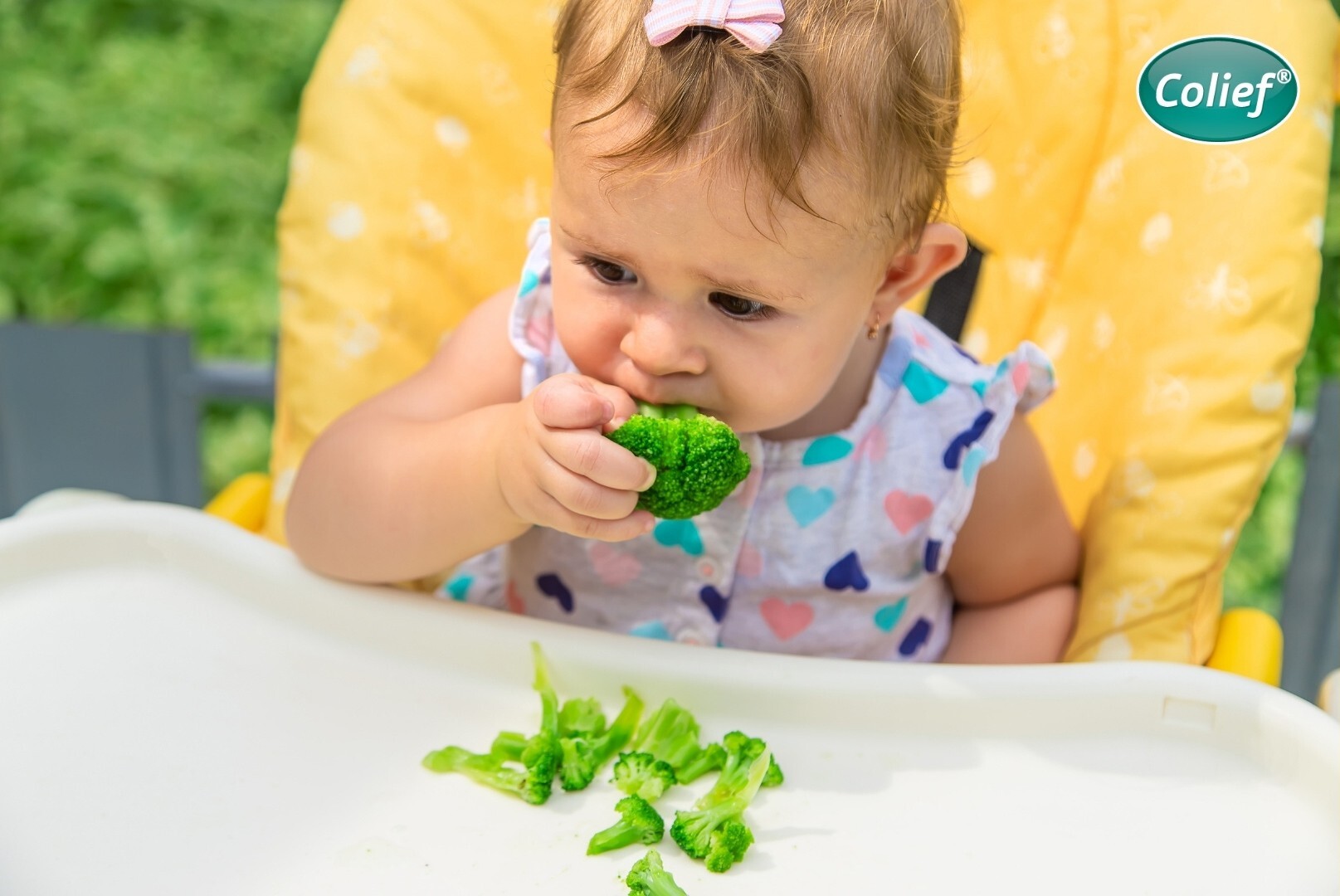
- smooth mash or soft, cooked sticks, cooled before offering
Great first options include vegetables and fruit like:
- broccoli, cauliflower, spinach, parsnip, carrot, sweet potato
Tip: include some less sweet vegetables too so baby gets used to a wider range of flavours early on.
Step 4: Keep portions tiny and pressure low
Start with a small amount. If your baby takes a little, that’s a win. If they push it out or make a face, that can be normal at first, it’s a new skill.
Avoid pressure. Weaning is about learning:
Step 5: Follow your baby’s cues
Signs they want more might include leaning forward or opening their mouth. Signs they’ve had enough can include turning away, pushing the spoon away, or getting fussy.
Stopping when they’re done helps keep mealtimes calm and positive.
Step 6: Build variety gradually
Once your baby is comfortable, you can slowly increase:
- the textures (from smoother to thicker mash and soft finger foods)
It can take repeated exposure for babies to accept a new food. Keep offering gently, without turning it into a battle.
Step 7: Keep milk feeds as the main source of nutrition
In the early stages, breast milk or formula remains the main source of nutrition, with solids alongside. If you’re breastfeeding, you do not need to switch to formula when you start solids.
Step 8: Where Colief Multivitamin Drops fit in
As weaning begins, intake can vary a lot day to day, and that’s completely normal. Colief Multivitamin Drops are designed to support babies as diets develop, alongside milk and a varied weaning diet.
They contain 9 essential vitamins, including A, B, C and D, are naturally orange flavoured, and can be given directly or added to food or drink.
Step 9: Keep it gentle
Some days will feel easy. Others will feel like more goes on the bib than in their mouth. That’s still part of the process.
One taste at a time is enough. You’re doing a great job.
Find out more useful information on our Instagram.




Comments